Grading is shaping the ground to the elevations on the plans. On most projects it happens in two stages: mass grading first, to move large amounts of soil and get the site close, then finish grading, to shape the surface precisely.
Mass grading
Mass grading is the big earthwork: cutting hills down, filling low areas, and building up pads and roadbeds to roughly the right height.
- What moves: a lot of material, often thousands of cubic yards on a subdivision or commercial site.
- Equipment: dozers, excavators, scrapers, loaders, haul trucks and compactors.
- The goal: get every part of the site within a reasonable margin of the plan, with fill compacted in thin layers so it doesn’t settle later. On many projects a testing firm checks the compaction as the fill goes in.
- Cut and fill balance: the ideal site balances, with the dirt from the cuts filling the low spots so nothing has to be hauled in or out. Hauling is expensive, so engineers and contractors work hard to balance a site.
Soil also changes volume. A cubic yard dug out of the ground takes up more space in a truck (it swells), and once compacted as fill it usually takes up less room than it did loose (it shrinks). Earthwork estimates have to account for both.
Finish grading
Finish grading (also called fine grading) shapes the surface to its final elevations and slopes, closely enough that what comes next fits.
- What moves: relatively little material, trimmed and shaped carefully.
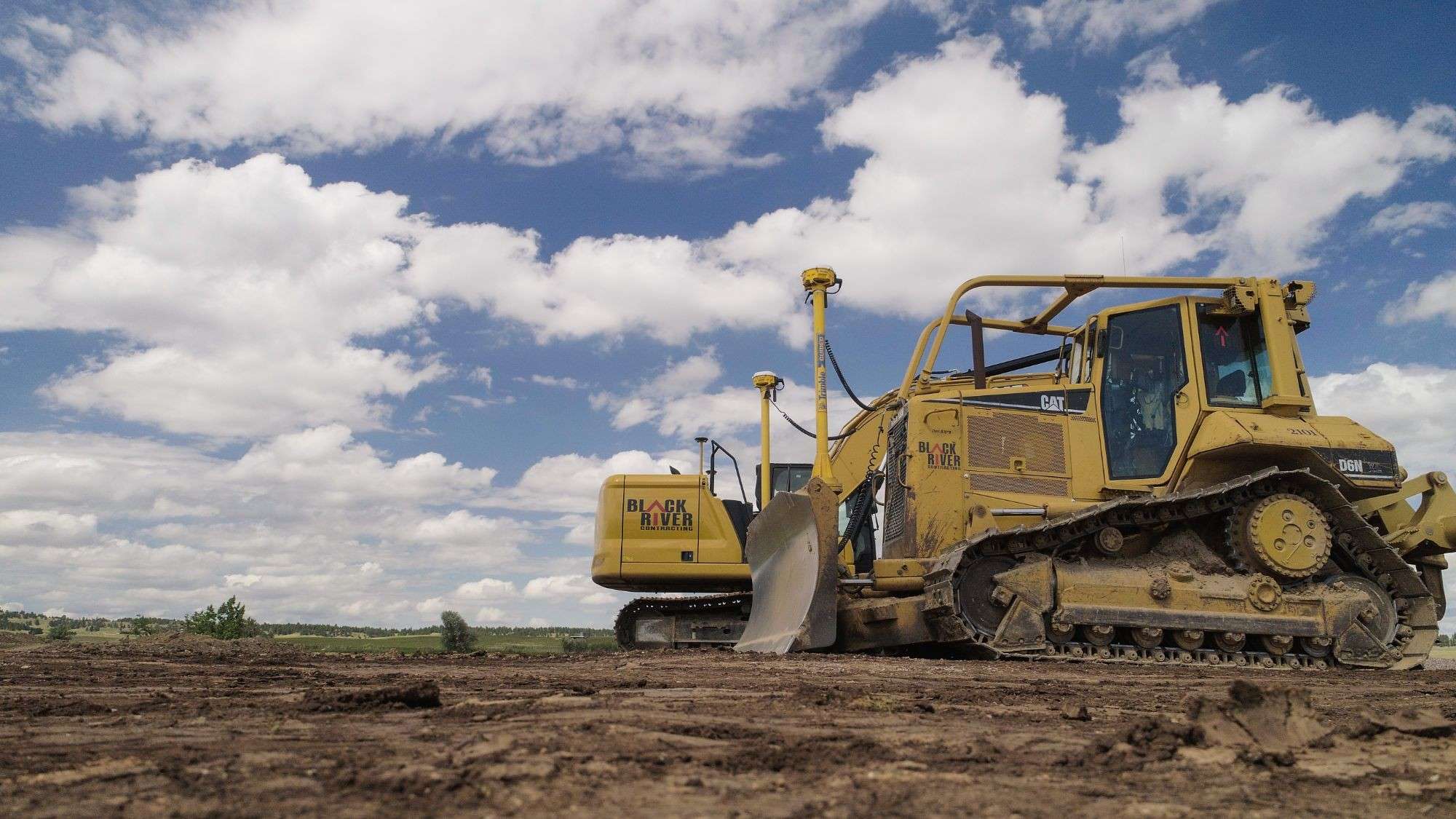
- Equipment: dozers and motor graders, often with GPS or laser grade control, plus compact equipment for tight spaces.
- The goal: subgrade at the right height for gravel and pavement, building pads ready for footings and slabs, slopes and swales that drain, and topsoil spread for landscaping.
Why tolerances matter
A few hundredths of a foot doesn’t sound like much, but:
- Drainage. On a flat site, a small error can make a low spot where water ponds against a building or on a parking lot.
- Pavement and concrete. If the subgrade is high, the asphalt or concrete ends up too thin. If it’s low, you pay for extra material to fill the difference.
- Building pads. The pad has to match the foundation design, so the slab and footings sit at the right height.
GPS grade control
Many contractors use GPS machine control for both stages. The engineer’s design is loaded into the machine as a 3D surface, and the system shows the operator, or controls the blade directly, so the cut or fill matches the plan as the work goes. That means fewer grade stakes, less rework and a surface that’s closer to the design.
Which do you need?
- New subdivisions, commercial sites, roads and large pads need both: mass grading first, then finish grading before paving, concrete and landscaping.
- A house lot usually needs some rough grading for the pad and driveway, then finish grading around the house so water runs away from the foundation.
- Landscaping and lawns usually just need finish grading and topsoil.
Need grading done?
Black River Contracting does mass grading and site preparation across Western South Dakota. See mass grading, mass grading and earthwork in Rapid City, or request a quote.