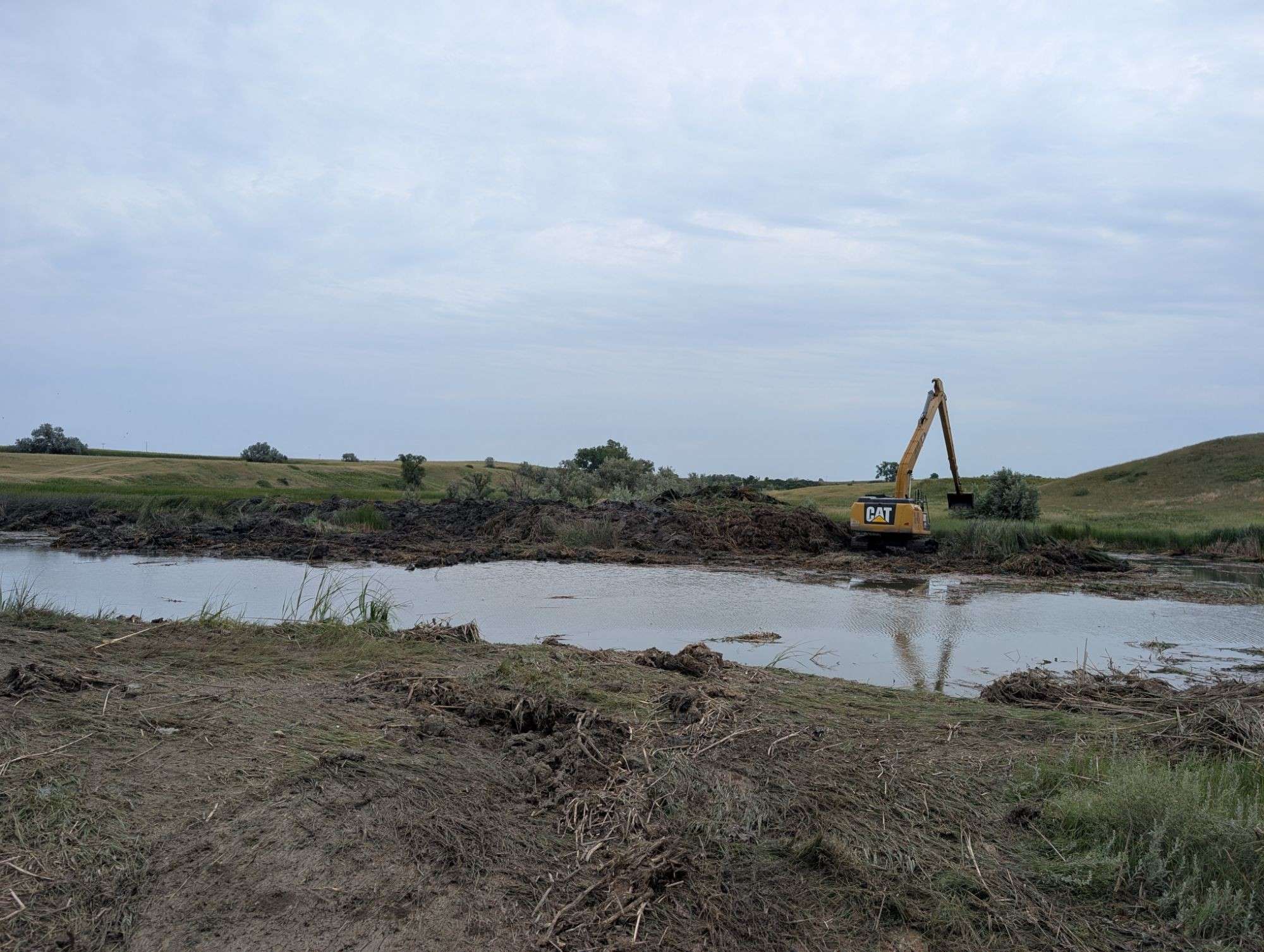
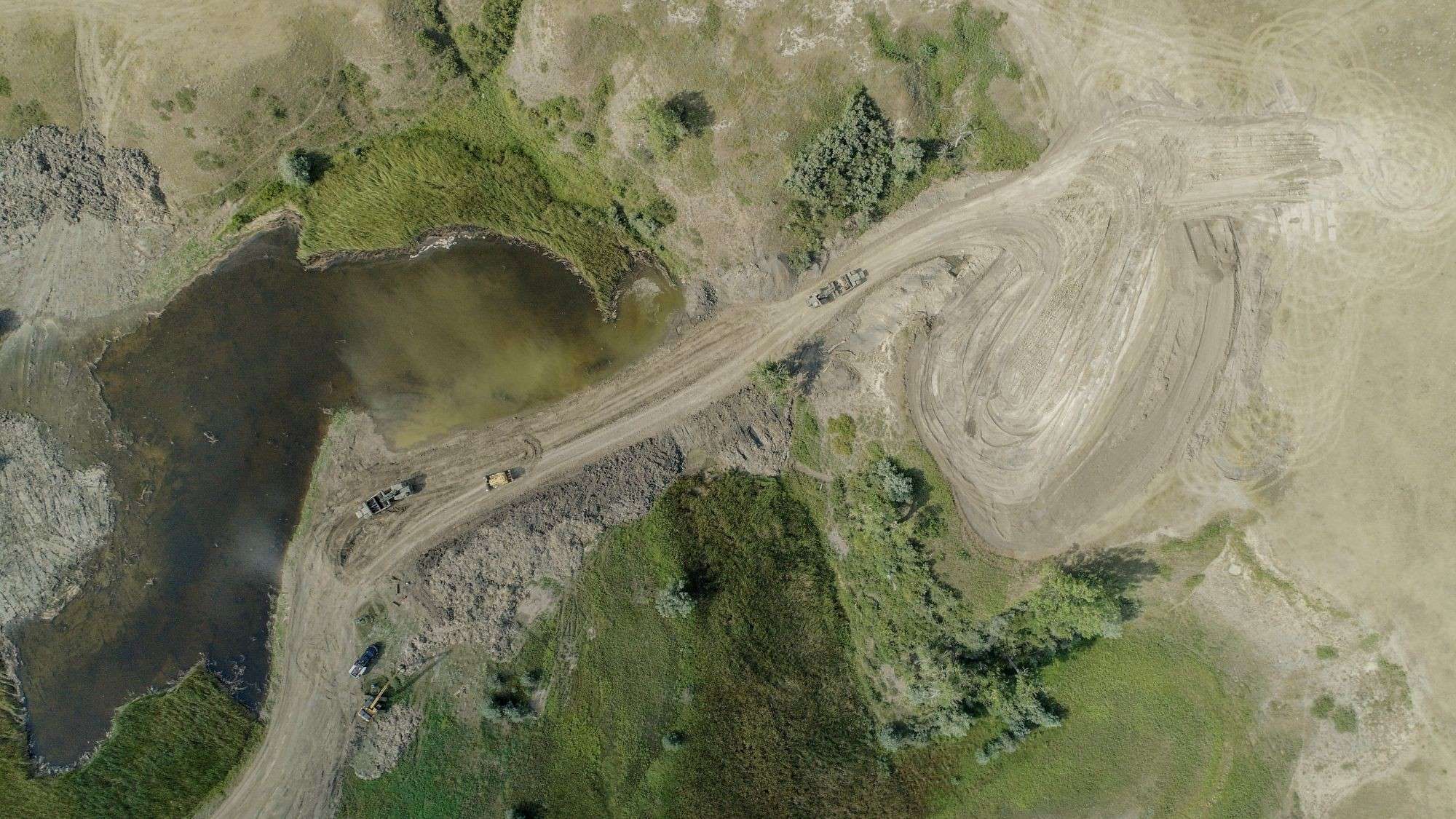
A stock dam can only hold so much. When the pond is full and a big storm comes through, the extra water has to go somewhere, and the spillway is where it’s supposed to go: around the end of the dam and back into the draw below. When the spillway fails, the water finds its own way, and too often that’s over the top of the dam.
What a spillway does
An earth dam can’t take water running over it. A sheet of water flowing over the crest cuts a notch that gets deeper by the minute, and a dam that took weeks to build can be gone in one storm. The spillway prevents that by giving the water a lower, controlled path in solid ground beside the dam.
Why spillways wash out
- Cut through fill. A spillway in loose dam fill erodes quickly. It belongs in undisturbed ground at the end of the dam.
- Too narrow. A spillway sized for an average rain can’t carry a big storm, so the water rises and goes over the dam anyway.
- Bare ground. Water speeds up where the spillway drops back into the draw. Without good grass, or rock where the water drops or turns, it cuts a headcut that works its way upstream toward the pond.
- Water around the end. If the spillway isn’t shaped so water stays in it, flow wraps around the end and cuts along the dam.
- Silted in or overgrown. A spillway that’s filled up with silt or brush carries less water than it was built for.
Warning signs
- A gully or headcut where the spillway drops back into the draw, especially one getting closer to the pond.
- Bare, cut ground in the spillway after storms.
- Signs water has run around the end of the spillway or along the dam.
- A crest that’s settled lower than the spillway, so water would go over the dam first.
How a lasting spillway is built
- In solid, undisturbed ground at the end of the dam, never in the fill.
- Wide and flat enough for big storms, so water spreads out and slows down.
- Lower than the dam crest by enough margin that water always goes out the spillway first.
- Grassed, and armored with rock where the water drops back into the draw or changes direction.
On larger dams, or where a lot of land drains to the pond, an engineer or NRCS can size the spillway. The USDA’s Ponds: Planning, Design, Construction handbook covers the basics.
Repairing one
Fixing a washed-out spillway usually means rebuilding it in solid ground at the right width and height, filling and compacting any cut that’s reached toward the dam, and placing rock where the water drops. If the dam crest has settled, it gets built back up too. Do it before the next big runoff.
Black River Contracting rebuilds spillways and repairs stock dams across Western South Dakota and Northeast Wyoming. See dam repair and cleanout and creek, stream bank and riprap work, or request a quote.