Before you build a new stock dam, or make an old one bigger, there’s paperwork to check and money that might help pay for it. Here’s a plain-English rundown for South Dakota and Wyoming. Rules change, so confirm with the agency before the dirt starts moving.
South Dakota: DANR Water Rights
South Dakota’s water belongs to the public, so new dams and dugouts go through the DANR Water Rights Program.
- Location Notice: enough for a dam that holds 25 acre-feet or less at the primary spillway, on a dry draw or nonnavigable stream, with the water used in place for stock watering or wildlife. The notice is recorded with the county Register of Deeds, a copy goes to the Water Rights Program, and construction has to start within 60 days of filing.
- Water Right Permit: needed for a dam over 25 acre-feet, one on a navigable stream, or one you pipe or pump water out of for more than reasonable domestic use. The permit has to be approved before you build, and it can take several months.
- Dam safety: larger dams can also fall under the state’s dam safety rules.
An acre-foot is one acre of water a foot deep.
Wyoming: State Engineer’s Office
In Wyoming, stock reservoirs are permitted through the State Engineer’s Office. It has a stock reservoir application for stock-only reservoirs with a dam under 20 feet high and less than 20 acre-feet, with a separate form when a pipeline runs from the reservoir to stock tanks. Larger reservoirs go through the regular permit process and can fall under Wyoming’s Safety of Dams rules. Check the current forms and fees before filing.
Work in a creek
Digging in a creek or placing fill or rock below its normal high-water line can need a U.S. Army Corps of Engineers permit under the Clean Water Act, in either state.
Cleaning out an existing pond
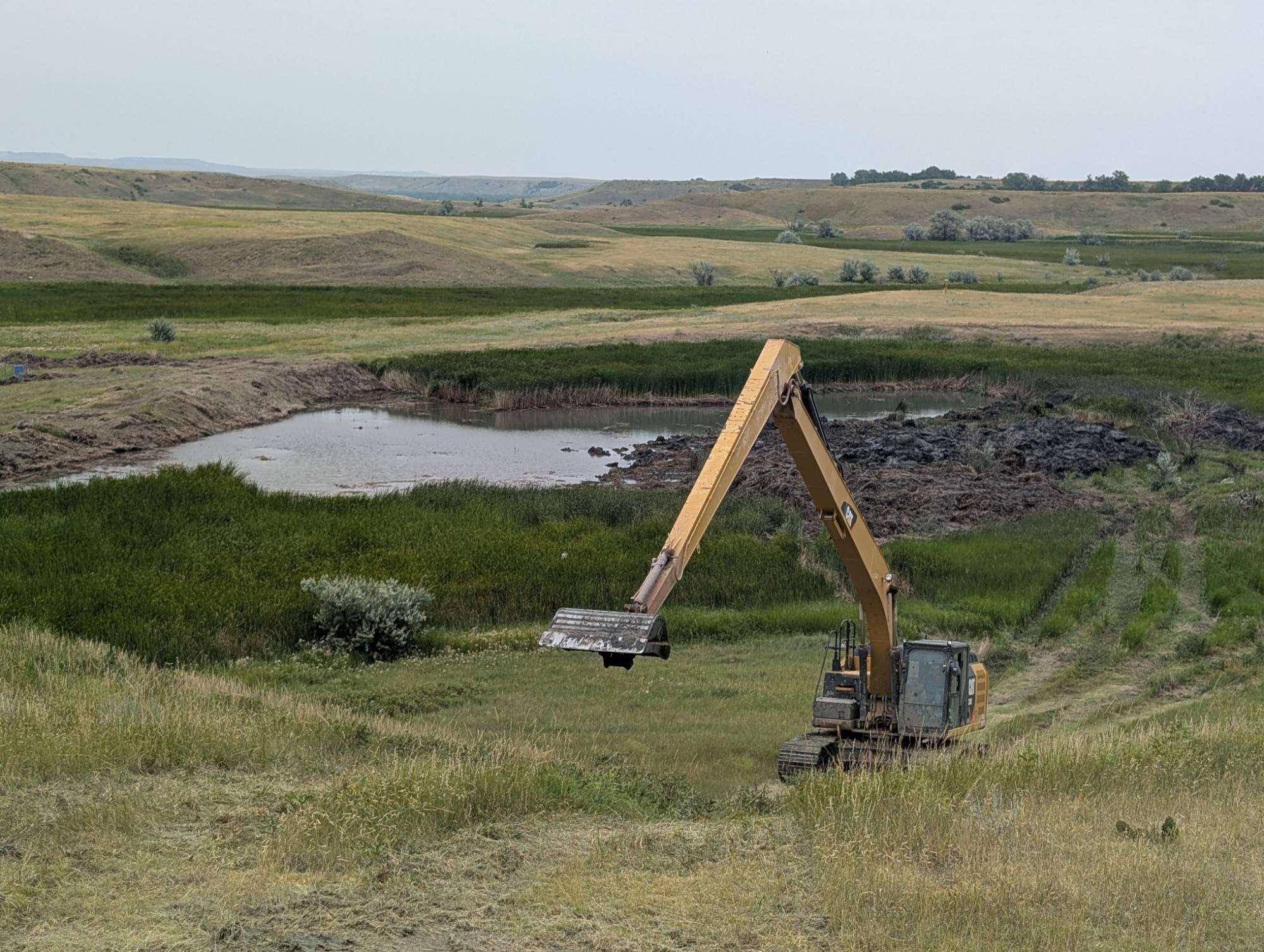
Restoring an existing pond to its original size usually doesn’t need a permit. Enlarging it or raising the dam can.
Cost-share
- NRCS: the USDA Natural Resources Conservation Service supports livestock water and grazing projects through programs like EQIP, and its field offices can help design ponds. Apply before the work starts; NRCS usually has to approve the plan first.
- SD Game, Fish & Parks: the Working Wetland and Grassland Program has cost-shared stock and wildlife impoundments, water development and other grazing practices. Projects need approval from a GFP private lands habitat biologist, and the program can require allowing some public hunting.
- Conservation districts can point you to local programs and the right NRCS staff.
How we fit in
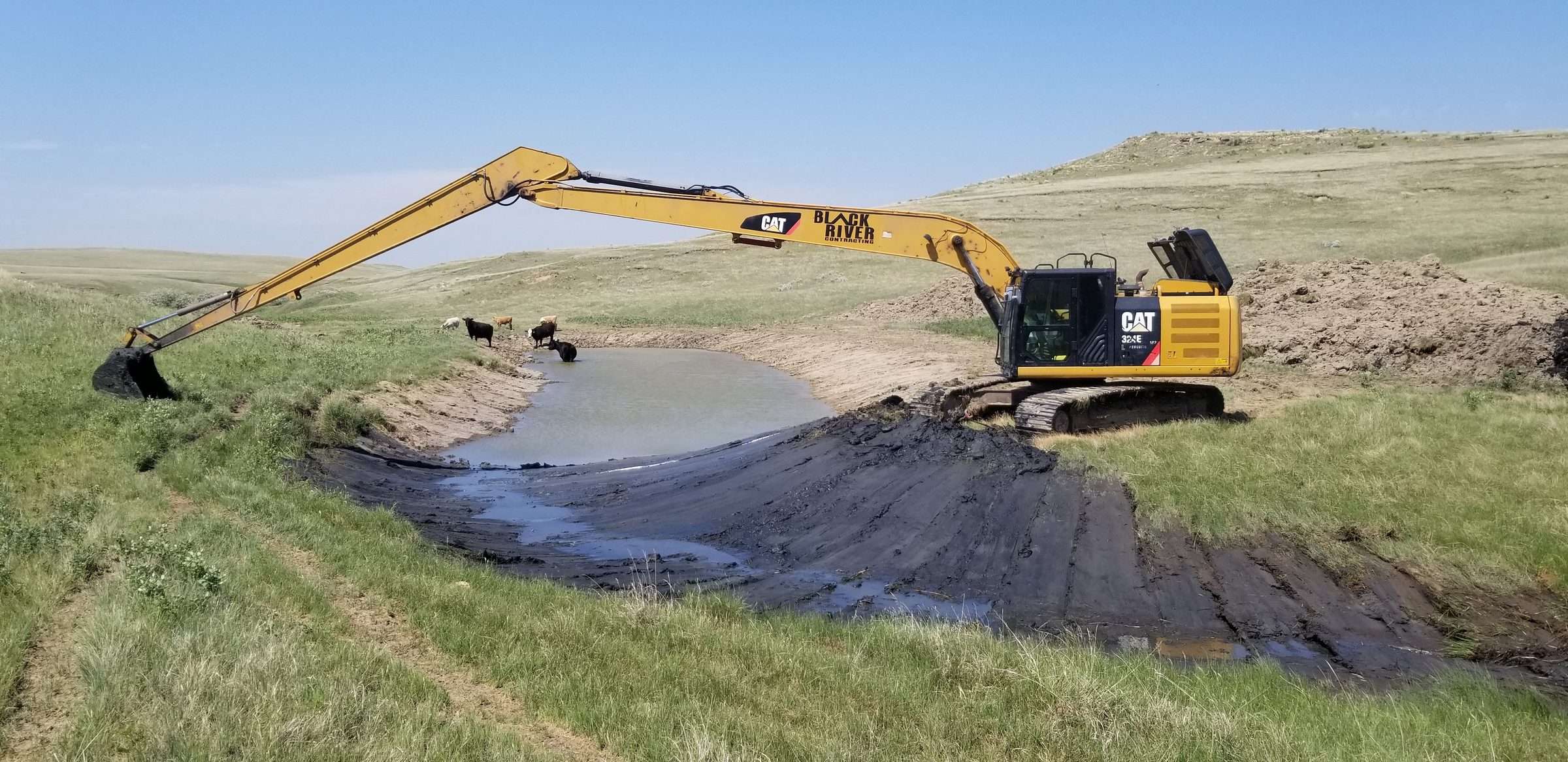
We build and repair stock dams and dugouts to whatever DANR, the State Engineer and NRCS approve, and we can work from an NRCS design. See pond construction, dam repair and building a stock pond in Western South Dakota, or request a quote.