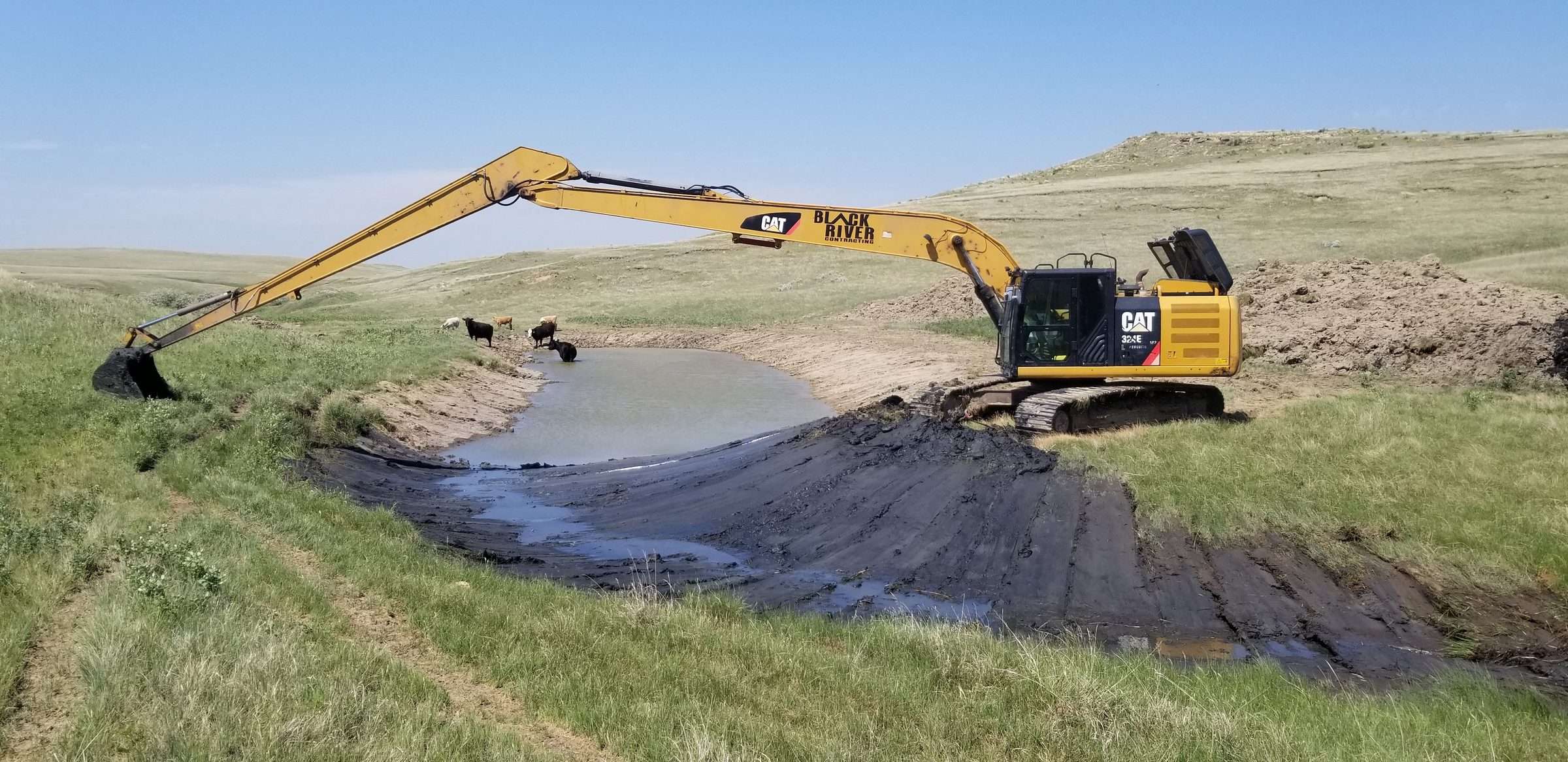
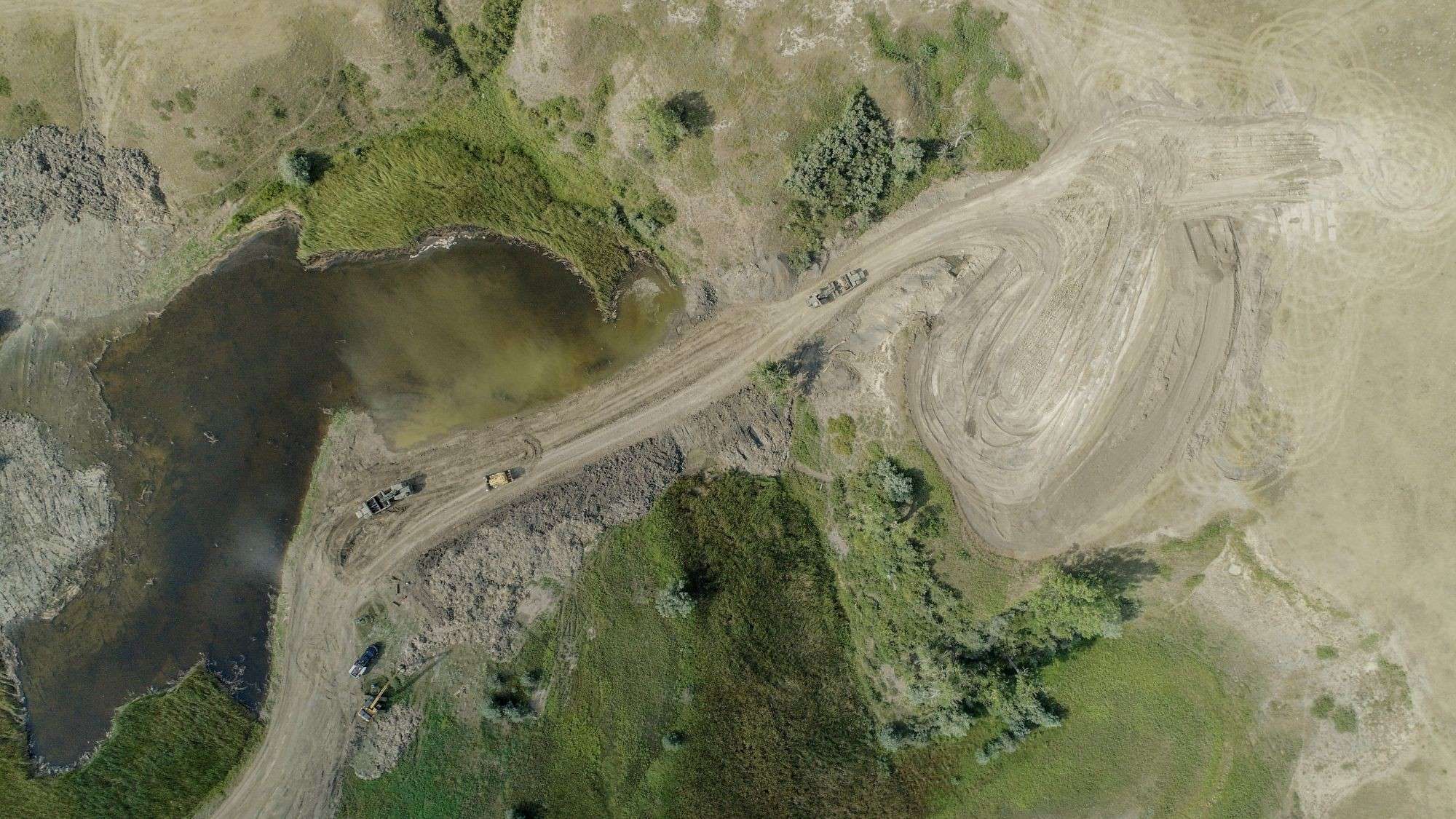
Black River Contracting builds ponds across Western South Dakota and Northeast Wyoming: stock dams and dugouts for cattle, farm ponds, and acreage ponds for wildlife, fire protection or just a place to look at. We’re based in Summerset, near Rapid City, and dig with excavators, dozers and haul trucks sized to the job.
A good pond starts with the right spot: enough drainage to fill it, soil that holds water, and room for a spillway so a big rain doesn’t take the dam out. Most of that is decided before the first scoop of dirt.
The ponds we build
- Stock dams across a draw, with a core trench, the dam built up in thin compacted lifts, and a spillway cut into solid ground that carries floods around the dam.
- Dugouts on flat ground, dug deep enough to carry water through a dry summer, with a sloped edge where cattle can drink.
- Farm and acreage ponds, shaped with gentle edges and a deep end so they don’t turn into a weed patch.
How a pond gets built
- Pick the spot together. We walk the site with you and look at the drainage, the slope, access for equipment, and where the spoil and topsoil can go.
- Test the soil. Test holes across the pond and dam footprint show whether there’s enough clay to hold water, or whether the pond needs clay hauled in or a liner.
- Locates and permits. We call in utility locates. You check with DANR in South Dakota, or the State Engineer in Wyoming, and with NRCS if you’re applying for cost-share.
- Strip and dig. Topsoil comes off first and is saved. Then we dig the basin and build the dam, compacting the fill in layers.
- Spillway and finish. The spillway goes in, the edges are shaped, and the topsoil goes back on so the disturbed ground can be seeded before the next runoff.
Rebuilding an old pond?
If an existing pond has silted in, see pond dredging and silt removal. If the dam leaks, seeps or has washed out, see dam repair and cleanout.
Related
- Building a stock pond in Western South Dakota: what to know first
- Stock pond and dugout cleanout
- Farm and ranch improvements for water lines, tanks and other ranch work