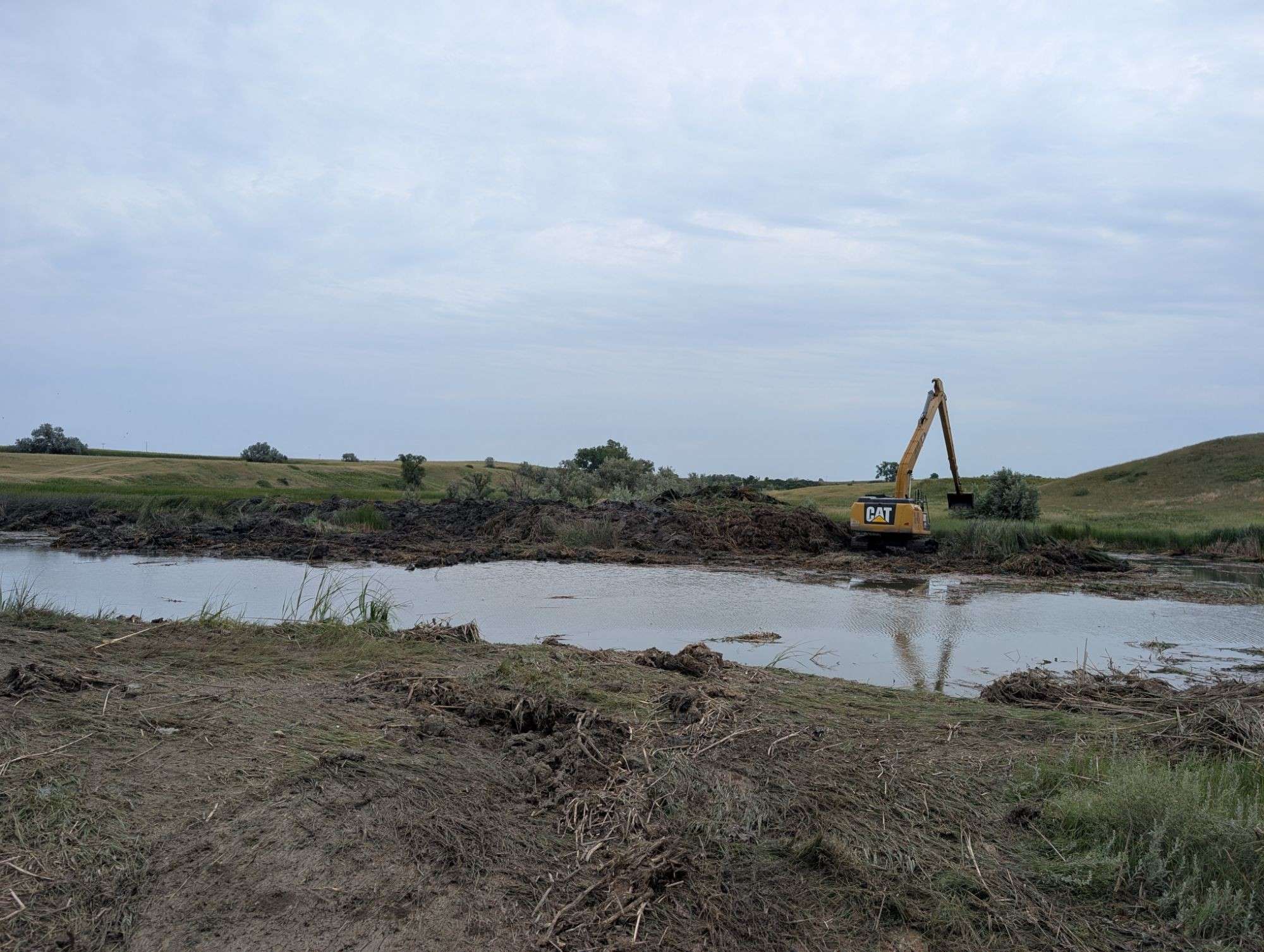
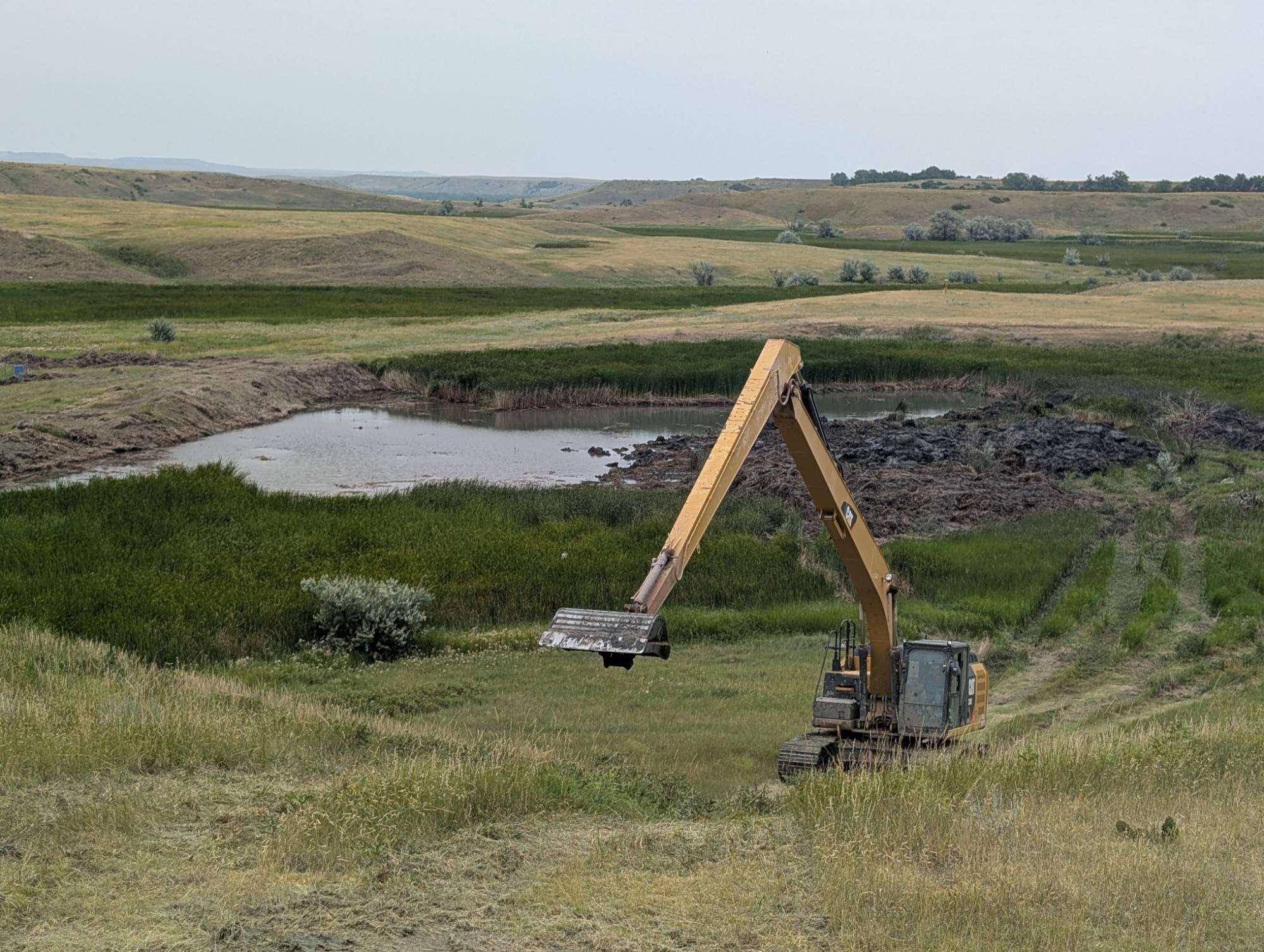
A well-built stock pond can water cattle for decades. A badly placed one leaks, fills with silt in a few years, or washes out in the first big storm. Most of the difference is decided before any dirt moves.
Stock dam or dugout?
- A stock dam (an embankment pond) is an earth dam built across a draw. It catches runoff from the land above it and can store a lot of water if the drainage is big enough. It needs a spillway, and the dam needs looking after.
- A dugout (an excavated pond) is a pit dug into flat or gently sloping ground with no dam. It fills from runoff or groundwater. It holds less for the dirt moved, but there’s no dam to wash out.
The ground usually makes the choice for you: a draw with a good drainage area suits a dam, and flat ground suits a dugout.
Picking the site
Drainage area. The land draining to the pond has to be big enough to fill it in a normal year, but not so big that runoff from a hard storm overwhelms the spillway. That balance depends on rainfall, soil and cover. The USDA’s Ponds: Planning, Design, Construction (Agriculture Handbook 590) walks through it, and your local NRCS office can help.
Soil that holds water. A pond holds water only if the soil under it and in the dam does. Soils with plenty of clay hold water. Sand, gravel, and fractured or porous rock leak. Dig test holes across the pond site and the dam footprint before you commit, and look at what comes up.
Silt. Bare ground, cropland and heavily grazed draws above the pond send silt into it with every runoff. Grass in the drainage area slows that down and makes the pond last longer.
Access for cattle. Gentle slopes on part of the bank let cattle drink without wading in and breaking the edge down.
How a stock dam is built
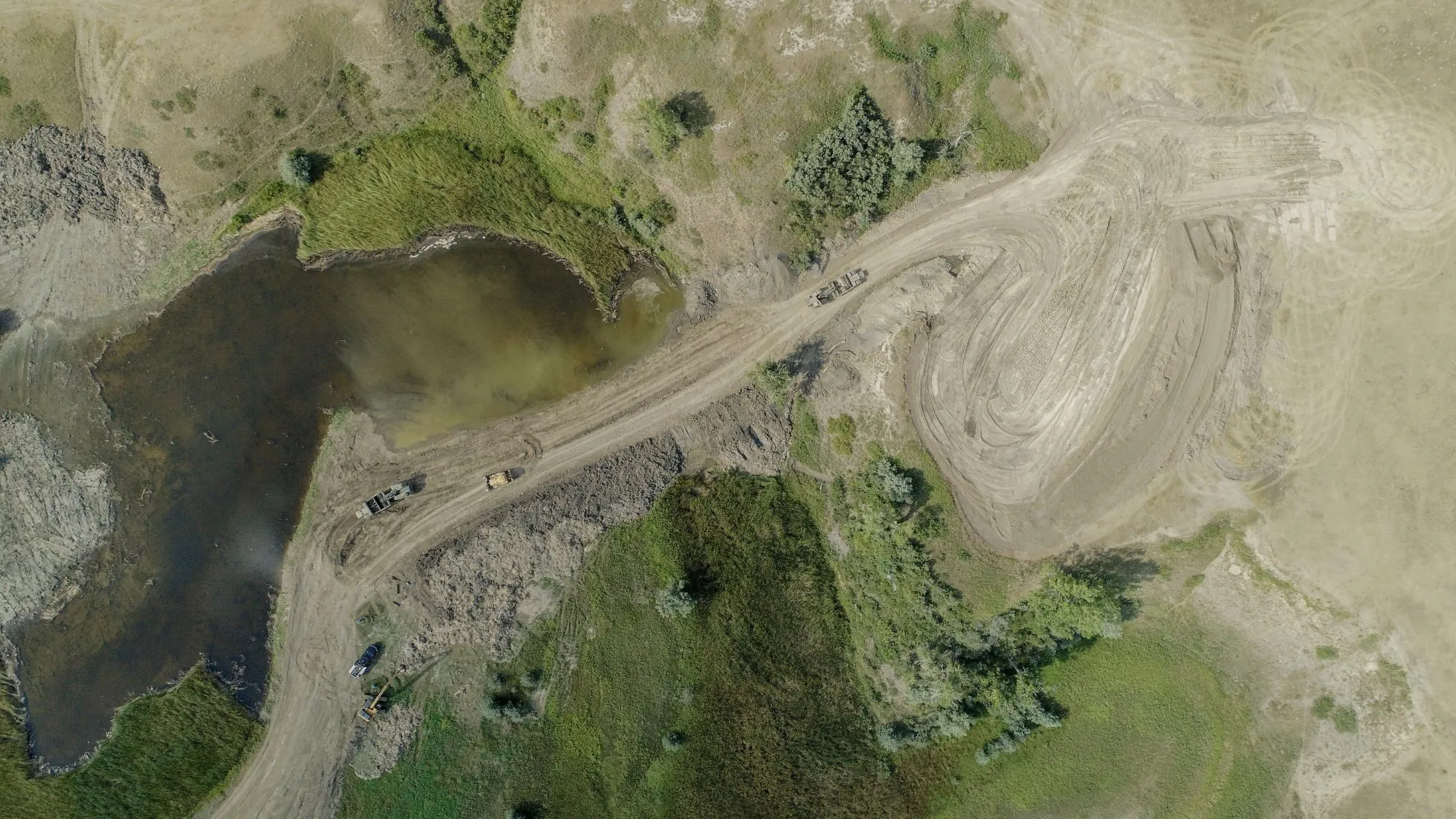
- Strip the footprint. Topsoil, roots and vegetation come off the dam site and the pond area, and the topsoil is saved for later.
- Core trench. A trench under the center of the dam, dug down to watertight material and filled with compacted clay, cuts off seepage under the dam.
- Build in thin, compacted lifts. The dam goes up a layer at a time from the best clay on site, compacted as it goes. A dam pushed up loose will seep and settle.
- Spillway in undisturbed ground. The spillway carries floods around the dam, not over it. It needs to be wide enough for big storms and cut into solid ground at the end of the dam, never into the fill.
- Freeboard and slopes. The top of the dam sits well above the spillway level, and the side slopes are flat enough to stay put.
- Topsoil and seed. Respread the topsoil on the dam and disturbed ground, and get grass growing before the next runoff.
South Dakota water rights
South Dakota’s water belongs to the public, so a new dam or dugout may need paperwork. According to the DANR Water Rights Program:
- A Location Notice is enough if the dam holds 25 acre-feet or less at the primary spillway, the water is used in place (for stock watering or fish and wildlife, say), and it’s on a dry draw or nonnavigable stream. The notice is recorded with the county Register of Deeds, a copy goes to the Water Rights Program, and construction has to start within 60 days of filing.
- A Water Right Permit is needed if the dam holds more than 25 acre-feet, if water is piped or pumped out of it for uses beyond reasonable domestic use, or if it’s on a navigable stream. The permit has to be approved before you build, and the process can take several months.
An acre-foot is one acre of water a foot deep. State dam safety requirements can also apply, depending on the dam’s size. Check with DANR before you start.
Getting help with the cost
The USDA Natural Resources Conservation Service (NRCS) has a conservation practice standard for ponds and can provide technical help with livestock water projects. Programs like EQIP sometimes share the cost. NRCS usually has to approve a project before it’s built, so start with your local field office, not after the dirt work is done.
When to build
Dry ground is easier to dig, compact and haul. Late summer and fall are often the best time, and a pond built in the fall can catch spring runoff.
Need a pond built or cleaned out?
Black River Contracting builds new ponds, stock dams and dugouts and cleans out old ones across Western South Dakota. See pond construction, pond dredging or stock pond cleanout.