Stock ponds and dugouts fill in. Every runoff carries silt off the pasture, cattle trample the edges down, and cattails close in from the banks. A pond that held water through August ten years ago goes dry in July, warms up, grows algae and turns into a mud hole cattle get stuck in.
Cleaning it out restores the depth that carries water through a dry summer.
Signs a stock pond needs cleaning out
- It goes dry earlier every year.
- Cattails and weeds have taken over the shallow edges.
- The water turns green, warm or smelly in summer.
- Cattle are getting bogged wading in to drink.
- The inlet has built a fan of silt, or the pond has a shallow flat at the upper end.
When to do it
The best time is when the water is low or gone, usually late summer, fall or a dry year. The silt is drier and easier to dig and spread, the bucket reaches the bottom, and a pond cleaned in the fall is ready to catch spring runoff. Drought years are the obvious chance: when ponds are low across the country, it’s the time to get them dug out before the next wet spring.
How a cleanout goes
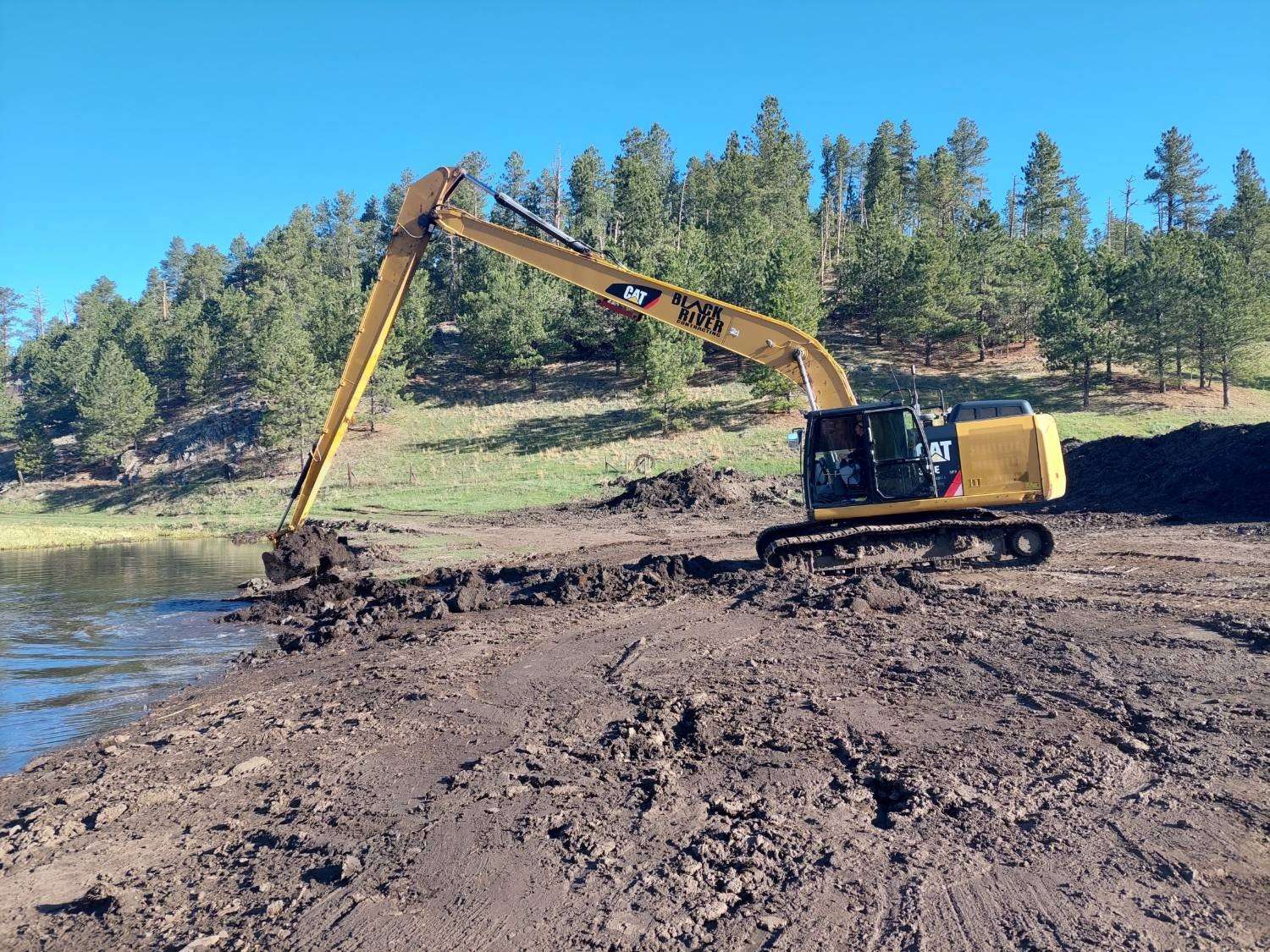
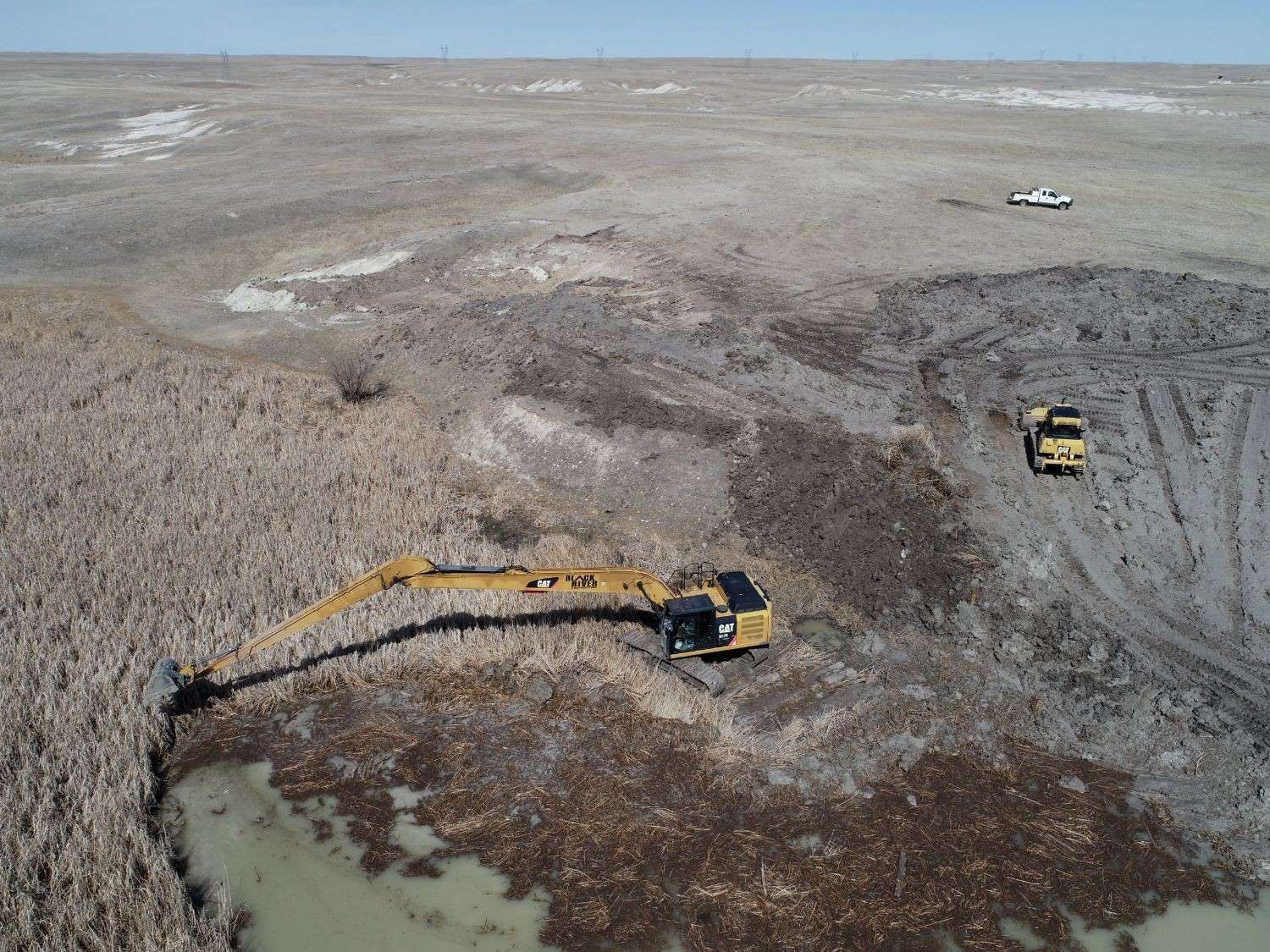
The trick with a stock pond is the soft bottom: drive a standard excavator onto it and it sinks. A long-reach excavator stays on firm ground on the bank or the dam crest and reaches out into the pond, so the pond doesn’t have to be drained and nothing gets stuck.
- Look at it first: where the machine can sit, how far it has to reach, and where the silt can go.
- Call in utility locates, especially near water lines and power to a well.
- Dig from the bank, working around the pond and pulling silt to the edge.
- Place the silt where you want it: spread, built into the dam or stockpiled to dry.
- Shape the edges with a gentle slope where cattle can drink without breaking the bank down.
Don’t dig too deep
Clean a pond back to about its original depth. Digging deeper can cut through the clay layer that holds water into sand or gravel below, and turn a pond that silted in into one that leaks. If you want more storage, talk it over first: a bigger pond may need a permit, and test holes show what’s under the bottom. See how to fix a leaking pond or stock dam if it’s already happened.
Line up the neighbors
On a distant ranch, getting the machine there is a big part of the cost. Lining up several ponds, yours and your neighbors’, on one trip spreads it out.
Black River Contracting cleans out stock ponds and dugouts across Western South Dakota and Northeast Wyoming with a Cat 324E long-reach excavator. See stock pond and dugout cleanout, or request a quote.