Ponds fill in. Every runoff carries silt off the land around them, cattails close in from the edges, and the water gets shallower, warmer and greener every year. Black River Contracting dredges ponds back to depth across Western South Dakota and Northeast Wyoming, removing silt and muck so the pond holds water again.
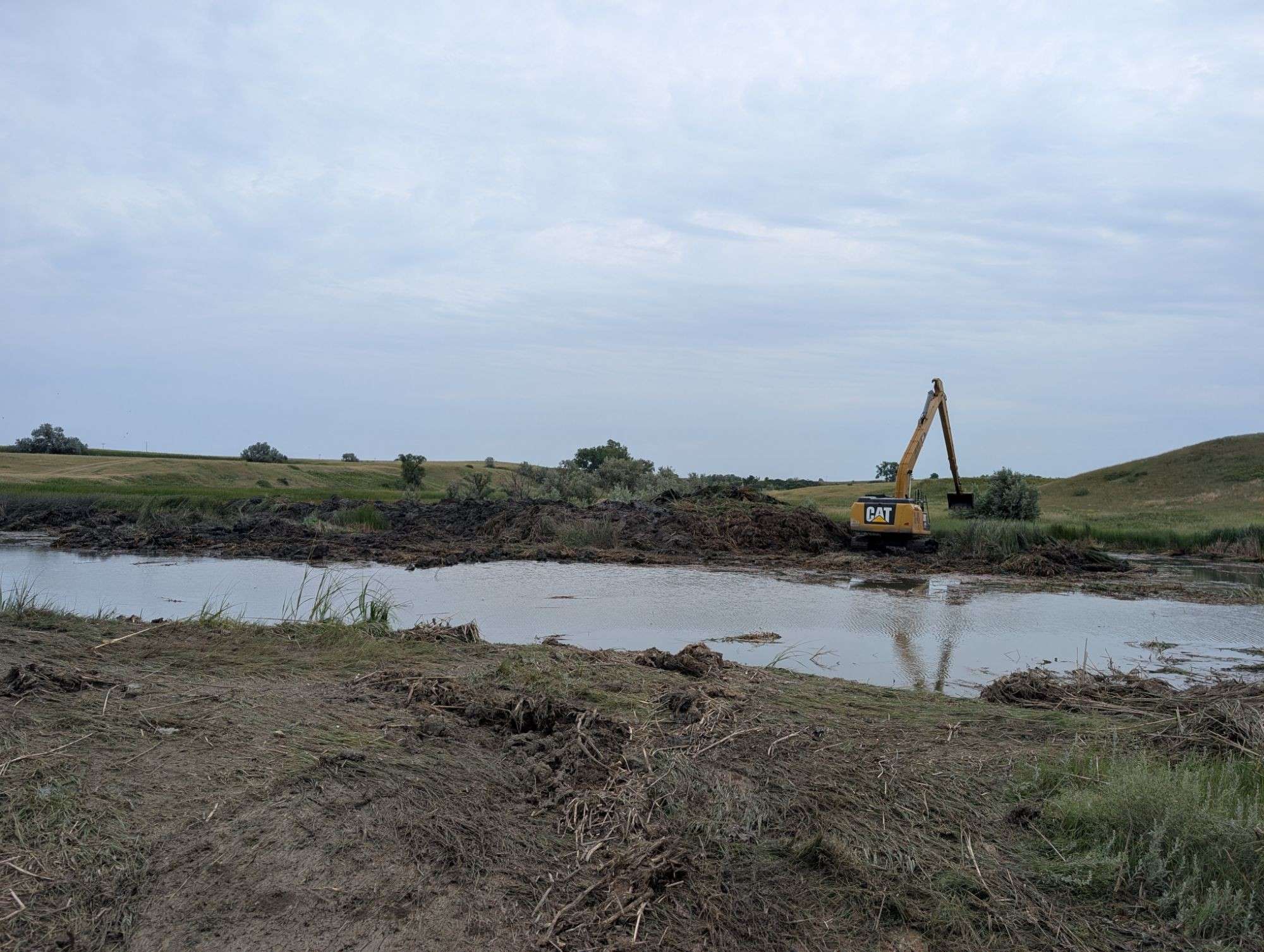
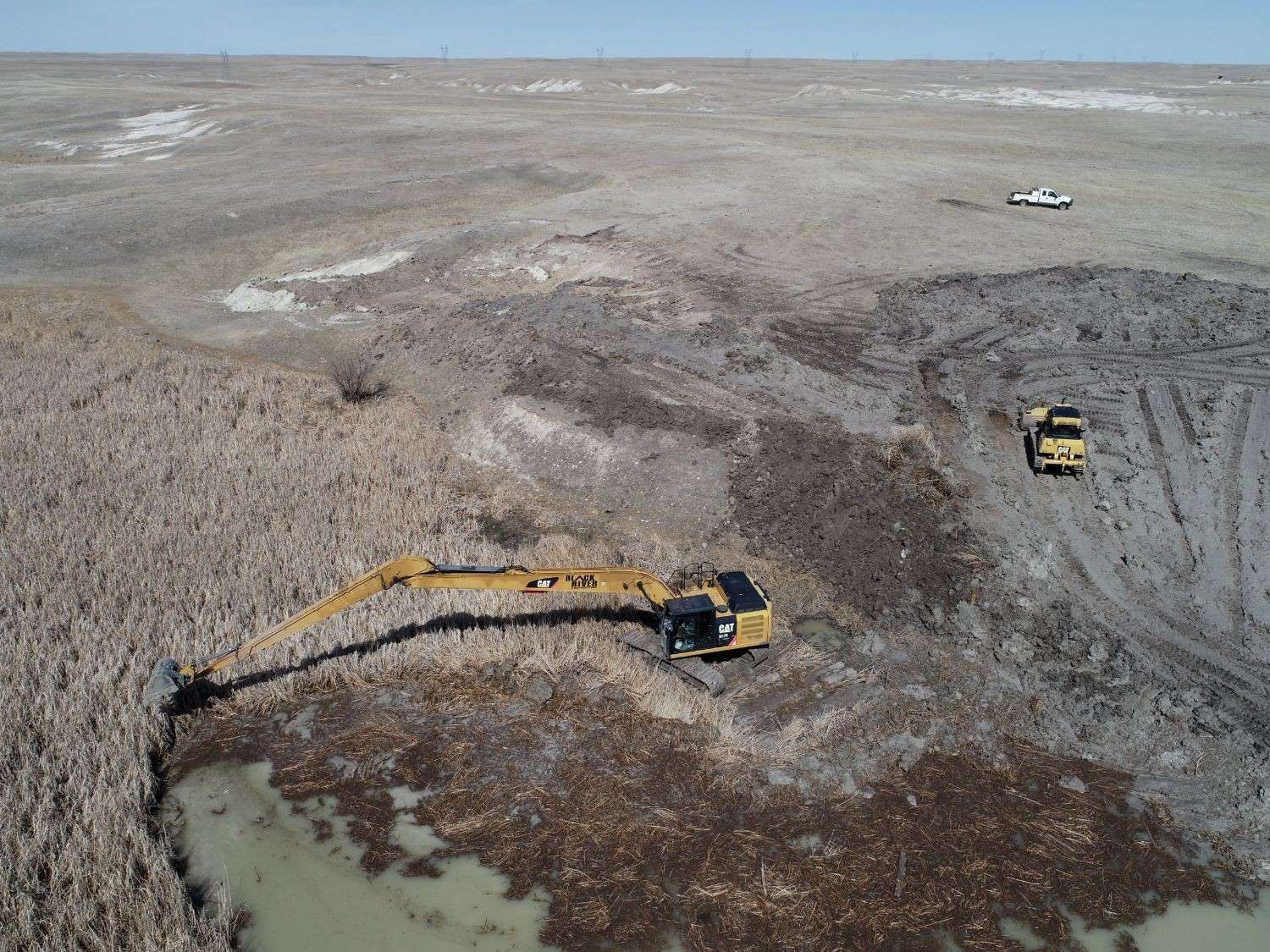
We do it with a Cat 324E with a 60-foot long-reach front, working from the bank or the dam crest. The machine stays on firm ground while the bucket reaches out into the pond, so the pond doesn’t have to be drained and nothing gets stuck in the soft bottom.
What we dredge
- Stock ponds and dugouts that have silted in or closed up with cattails. See stock pond and dugout cleanout.
- Farm and acreage ponds that have gone shallow, weedy and green.
- Detention and retention ponds that need their storage back.
- Spillways and inlets that have filled in and no longer carry water where it should go.
Signs a pond needs dredging
- It goes dry earlier in the summer than it used to.
- Cattails and weeds are taking over the shallow edges.
- The water is warm, green or smells in summer.
- The inlet has built up a delta of silt, or the spillway has filled in.
How a dredging job goes
- We look at the pond with you: where the machine can sit on firm ground, how far it has to reach, and where the spoil goes.
- We call in utility locates and plan access for the machine.
- We dig from the bank, working around the pond and pulling silt and muck to the edge.
- We place the spoil where you want it, spread, built into the dam or stockpiled to dry.
- We shape the edges so the banks hold and cattle can drink without breaking them down.
Related
- Pond construction and excavation for new ponds
- Dam repair and cleanout for dams that leak, seep or have washed out
- Long-reach excavation