East of the Black Hills, the country opens up into grass, breaks and draws: the Cheyenne River running past Wasta, the Bad River forming at Philip, the Badlands edge at Interior, and Buffalo Gap National Grassland spread across the middle. Out here, cattle drink from stock dams and dugouts, and every one has to hold enough runoff to last through a dry summer.
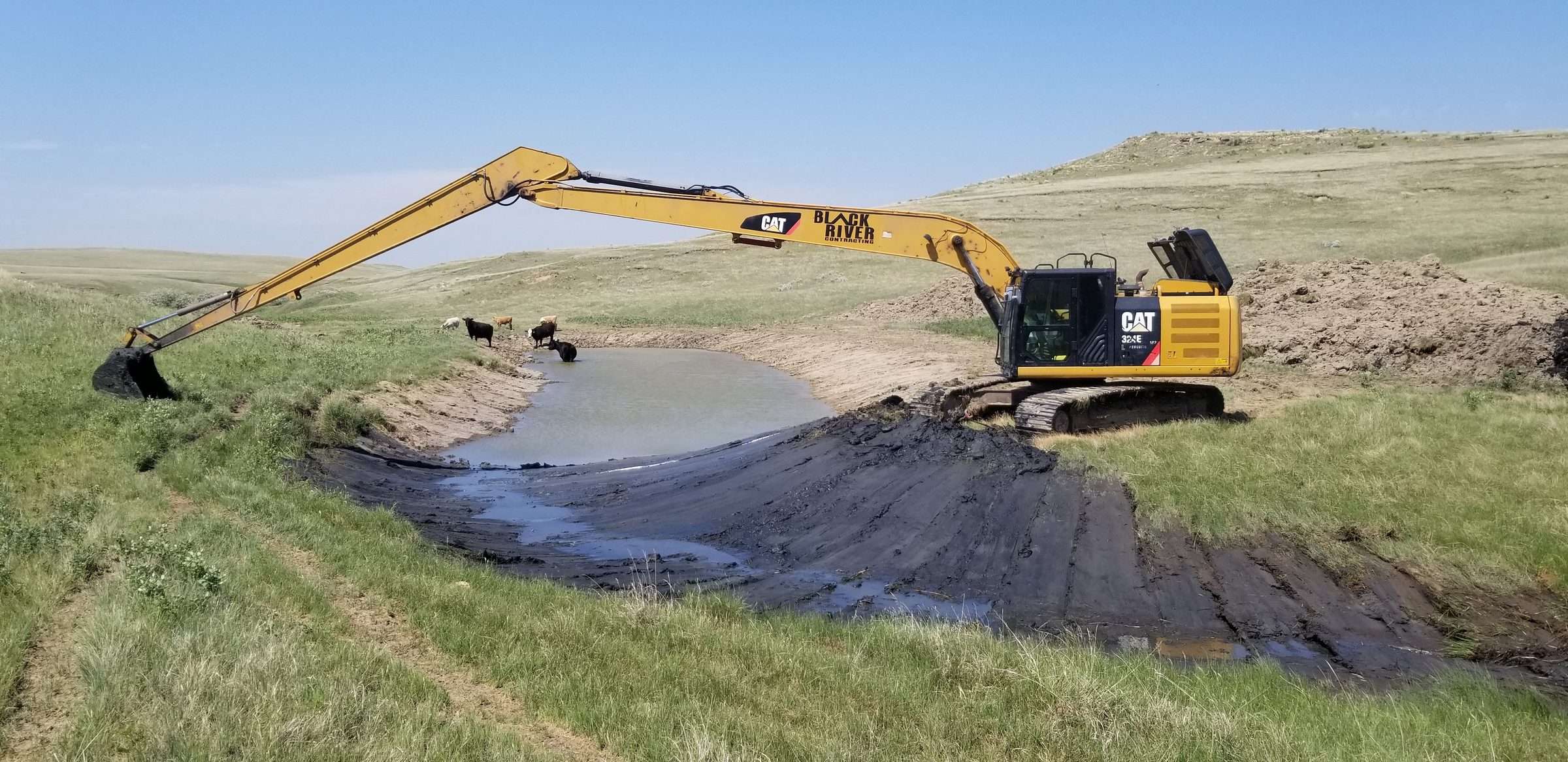
Black River Contracting brings its Cat 324E with a 60-foot long-reach front out to ranches around Wall, Philip, Kadoka and Wasta, and does the dirt work that keeps ranch water working across eastern Pennington, Haakon and Jackson counties, from our yard in Summerset on I-90.
Long-reach work around Wall, Philip and Kadoka
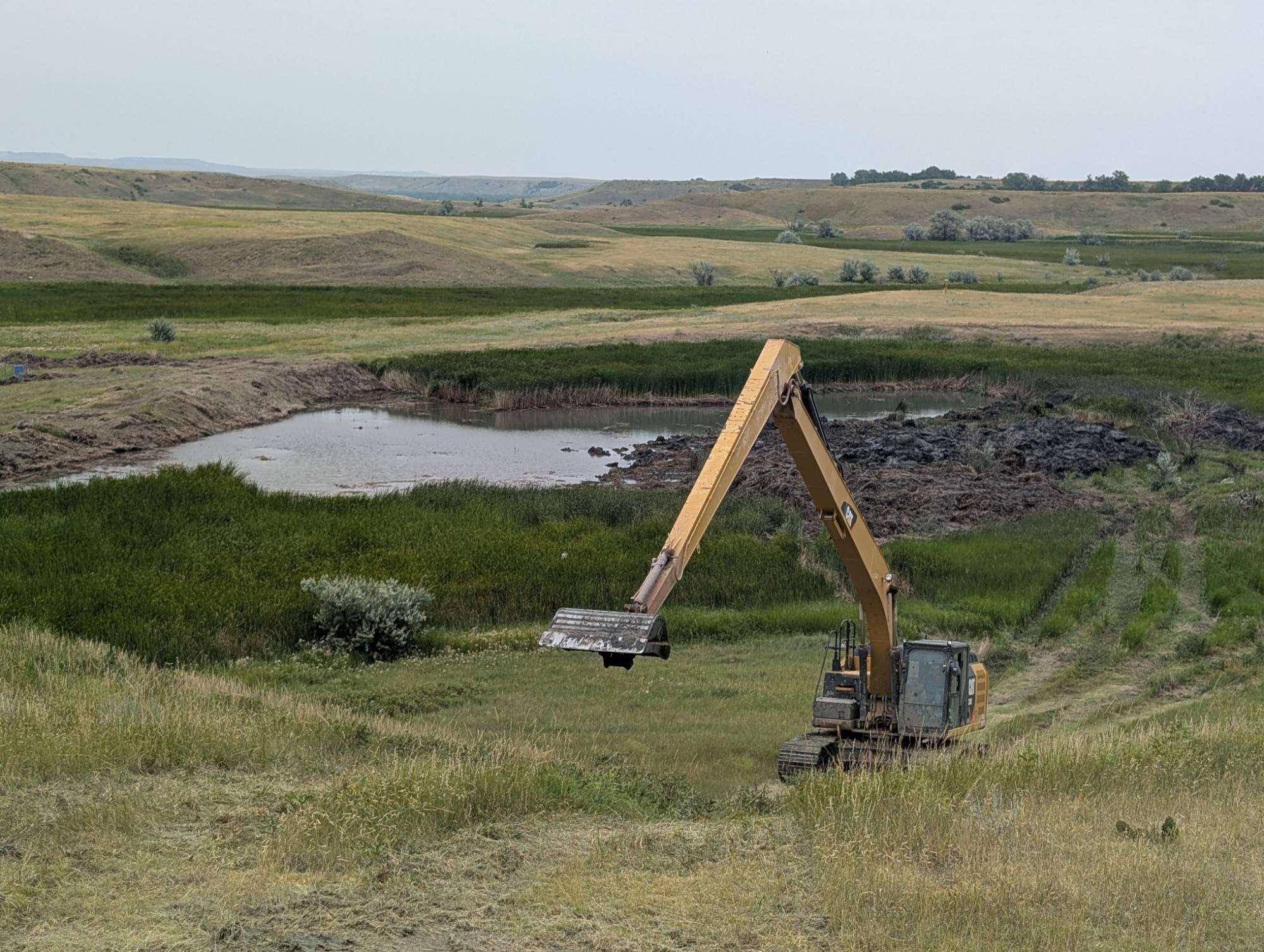
- Stock dam and dugout cleanout, digging silted-in ponds back to depth from the bank with a long-reach excavator that stays off the soft bottom. See stock pond and dugout cleanout.
- New stock dams and dugouts, laid out with you, built in compacted lifts with a spillway in solid ground. See pond construction.
- Dam repair: leaks, seeps, trampled crests and washed-out spillways. See dam repair and cleanout.
- Ditches, draws and culverts cleaned out so runoff goes where it should. See ditch and culvert cleanout.
- Ranch roads and approaches, with culverts that carry the water under them.
Towns we cover
- Wall and the ranches north and south along the grassland
- Philip and the Bad River country of Haakon County
- Kadoka, Interior and Cottonwood in Jackson County and along the Badlands edge
- Wasta and Quinn along the Cheyenne River and I-90
- New Underwood and Caputa, closer to Rapid City
How a ranch job goes
We talk through the work on the phone first: where the dams and ditches are, what’s wrong with them, and photos if you have them. Then we come out, walk it with you, and give you a number for the whole trip. Utility locates get called in before we dig, even on ranch ground where buried lines are rare.
Related
- Building a stock pond in Western South Dakota
- Farm and ranch improvements
- Long reach excavation in Rapid City